

 LinguaVox
 ISO 9001
 ISO 17100
 ISO 18587
For a broader range of winery documents, start with our wine translation service. Export work needs additional attention because product information, distributor material and label copy are often tied to a specific destination market.
Labels and back labels
A label is a constrained piece of text. Space is limited, typographic hierarchy matters and some elements may be subject to legal or importer requirements. A linguistically accurate translation can still be unusable if it does not fit the design or if it fails to respect the approved wording for the destination market.
Where possible, we ask to see the artwork, draft layout or at least the character limits for the text fields. That allows the translator to make informed choices rather than discovering layout problems after the design has been finalised.
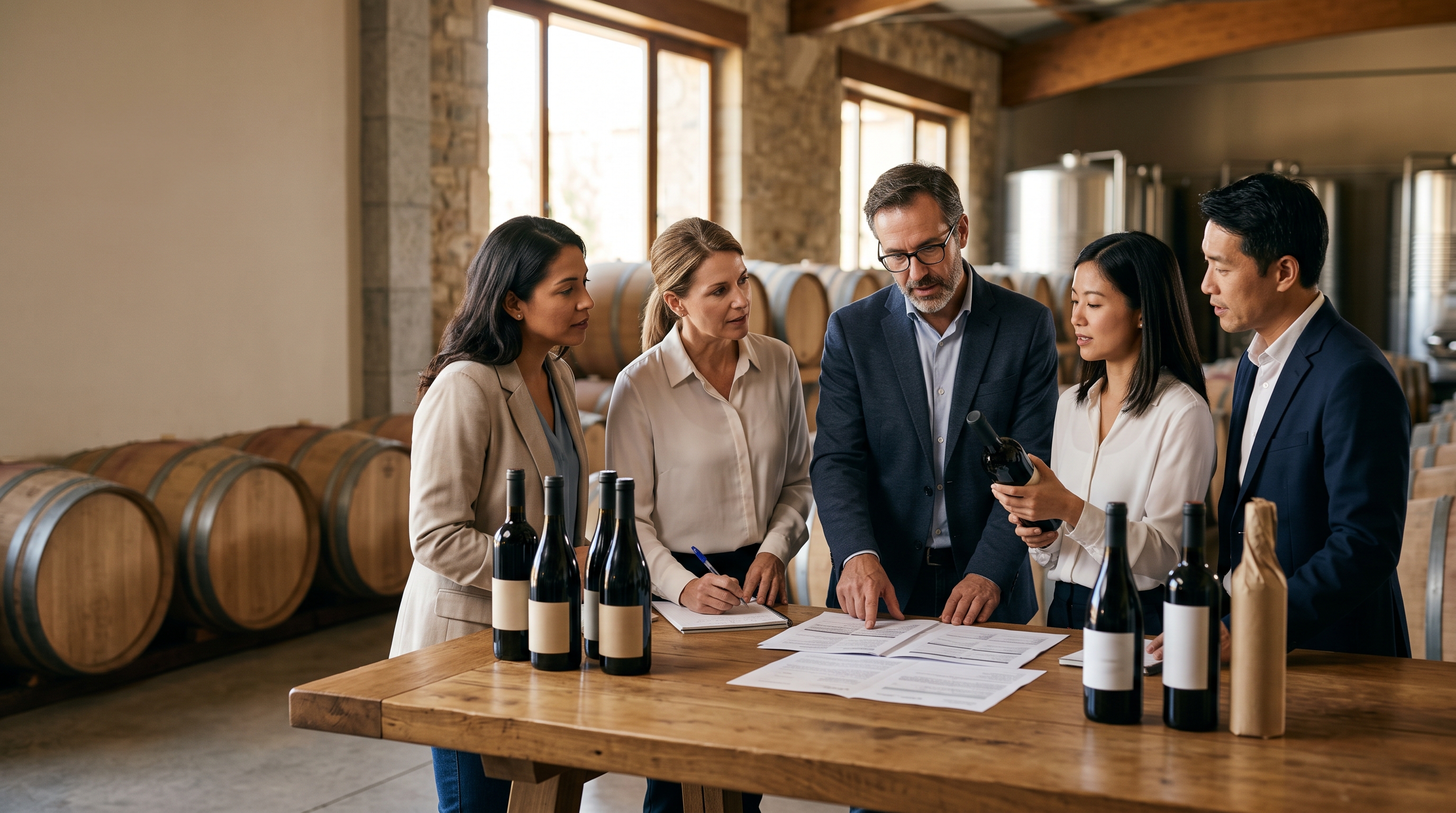
Regulatory responsibility and linguistic responsibility
LinguaVox translates and adapts the agreed text. We do not replace the regulatory adviser, importer or specialist responsible for deciding what a wine label must legally contain in a particular country.
The practical division is important: the client confirms the required information and any mandatory wording; our role is to produce wording that is accurate, natural and consistent with the rest of the product material.
Technical sheets for importers
Wine sheets often combine grape varieties, vineyard data, vinification, ageing, analytical information, serving recommendations and tasting notes. Figures, units and product facts must not change during translation.
When several wines share similar production information, working on them together makes it easier to maintain terminology while still preserving the distinctions between individual labels.
Distributor and sales documentation
Importers may also need catalogues, brand presentations, pricing documents, sales decks and background information about the winery. Translating these pieces within one project reduces the risk that the same wine, vineyard or production process is described differently in each file.
For English-language markets and international trade, our English-Spanish translation service can be used alongside the wine-sector workflow.
Preparing for fairs and buyer meetings
A trade fair may require product sheets, a presentation, a catalogue and translated website pages in addition to the label itself. Preparing the material as one coordinated set makes it easier to verify names, figures and terminology across all pieces.
If the winery will also meet overseas buyers in Valladolid, we can arrange interpreting for business meetings. Giving the interpreter the translated product material in advance helps align spoken and written terminology.
Working in several export languages
A winery may use English as a common trade language while still needing French, German, Portuguese, Chinese or other local-language material for specific markets. We recommend translating from the original Spanish source wherever practical rather than using English as an automatic bridge language for every subsequent version.
The languages we translate provides an overview of the wider combinations available through LinguaVox.
Website content and market-specific scope
Not every country needs an identical copy of the Spanish website. One market may require the full site, while another only needs product pages and distributor information. A smaller but complete language version is usually more useful than a full menu that sends visitors into untranslated content.
For visitor-facing content and direct marketing, see our wine tourism and marketing translation.
Recurring campaigns and version control
Wine portfolios change. New vintages, new labels and new export markets create recurring translation work. Translation memories, product glossaries and clear version control make these updates easier to manage and reduce accidental changes to approved terminology.
Send us the source files, destination market, languages and any importer instructions through our Valladolid translation services team. We will confirm the appropriate workflow before translation starts.
One product, several controlled versions
A wine may be sold in several markets with small differences in label copy, distributor details or supporting documents. We can keep the common wording aligned while clearly separating the versions that belong to each destination, reducing the risk of reusing text from the wrong market when artwork is updated.
Frequently asked questions
Can you translate a wine label before the final artwork exists?
Yes. A draft or list of text fields is enough to begin, although seeing the intended layout helps us understand space constraints. A final linguistic check may be useful once the artwork has been prepared.
Do you check the legal labelling requirements for each country?
No. The winery, importer or regulatory adviser should confirm the mandatory content and wording required by the destination market. We translate and adapt the agreed text and can flag obvious linguistic inconsistencies.
Can you translate several wines in one project?
Yes. Working on a range together usually improves consistency because recurring terminology can be checked across all products while individual descriptions remain distinct.
Do you translate distributor presentations and price material?
Yes. Catalogues, presentations, technical sheets and other sales material can be coordinated with the label translation so that product names and descriptions remain consistent.
Can you keep terminology for the next vintage?
Yes. Where appropriate, we can maintain translation memories and glossaries so that approved wording can be reused and updated rather than recreated from scratch every season.